
Decoding Digital Transformation and Fintech Trends for 2023
Technology is developing at an unparalleled rate in the banking and financial sector, completely transforming conventional procedures and products. Fintech is rapidly innovating banking as we know it, from automating routine banking processes using Robotic Process Automation (RPA) to empowering customers by giving them control over their financial data through open banking systems. These changes are helping to lower operating costs, increase operational efficiency, enhance customer outreach, improve customer service, and boost overall competitiveness in the sector.
Fintech is opening up new banking models with digital payments, cryptocurrencies, digital assets, and many other innovations, raising customer expectations for the sector. The core objective of digital transformation is customer experience and the need to create a secure environment for increased customer engagement.
The Global and Indian Fintech Market Statistics
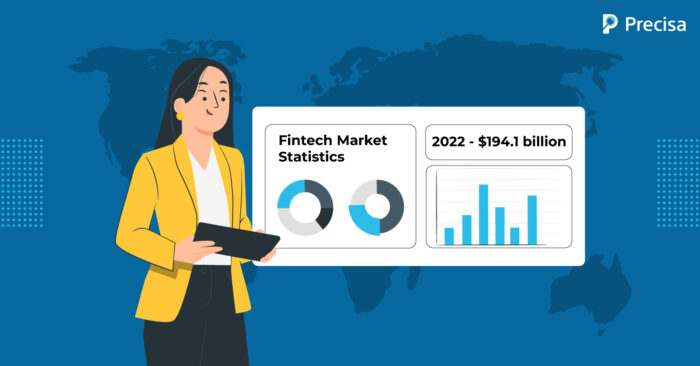
The fintech market worldwide stood at $194.1 billion in 2022. Experts predict the sector to grow at a CAGR of 16.8% from 2023 to 2028, reaching $492.81 billion by 2028.
India currently has the world’s third largest fintech ecosystem and its fintech adoption rate is at 87%, which is higher than the global average. Predictions peg that India’s fintech market, which is valued at $50 billion in 2023, will have $1 trillion in Assets Under Management (AUM), generating a revenue of $200 billion by 2030.
The Indian fintech market is expanding due to both supply and demand factors. As of August 2022, India had 7460 fintech companies, with $29 billion invested in the industry. The industry also receives favourable regulatory treatment. This phenomenon may be fueled by demographic opportunities, such as a young, tech-savvy population with rising disposable income. Simultaneously, the rapid expansion of e-commerce is also causing a rise in loan demand from MSMEs and retail borrowers, particularly in tier II and tier III cities. This demand provides a favourable growth opportunity for digital payments and digital lending.
5 Key Fintech Trends to Watch Out for in 2023
As 2023 progresses, the financial sector is abuzz with terminologies such as embedded finance, open banking, decentralised finance (DeFi), banking as a service (BaaS), neo-banks, etc. Although it is hard to tell which of these fintech models will steer the financial services sector in the coming days, assumptions can be made based on prevailing trends. Here are some of the predictions for the fintech sector 2023 and beyond.
1. Technology will continue to pave the way
The artificial intelligence (AI), machine learning (ML), and cloud computing technologies that are currently pushing the growth of the fintech industry will continue to do so for at least the foreseeable future. Indeed, AI and ML will be used more extensively in risk management and cyber security. These technologies enable data-driven business models, which help in achieving cost optimisation and financial inclusion objectives. Cloud computing provides financial companies greater access to data and, thereby, better insights into customer behaviour.
2. BaaS to gain momentum
Banking as a service (BaaS) is a business model that is currently underutilised for its potential in India. Despite the ongoing financial inclusion initiatives, a large section of the Indian population remains unserved or underserved (22% according to global Findex, 2021) in terms of banking and other financial facilities. There is ample opportunity for collaboration between traditional banks, NBFCs, and fintech firms to reach out to this segment with innovative banking products.
3. Emphasis on cyber security will increase
Moving monetary transactions to digital space comes with increased risks of cyber security and financial fraud. Digital banking handles a massive amount of customer data, both financial and personal, which is vulnerable to security breaches. Some of the potential hazards that financial services face while utilising fintech include malware and ransomware assaults, phishing, spoofing, identity thefts and financial frauds, data manipulation, etc.
As mentioned earlier, AI can be used to recognise patterns in transactional data, identify security breaches, locate and fix bugs in the network, and also verify customer authenticity. In the future, biometrics and facial recognition will be used more for customer verification, authentication, and fraud prevention.
4. Embedded finance to grow
Embedded finance is a facility that layers a financial service with a non-financial activity, e.g., a credit facility like buy now pay later (BNPL) with online shopping. Besides loans, there are other embedded services like payments, insurance, wealth management, etc.
Embedded finance is expected to boom, especially in emerging markets, and reach a volume of $248.4 billion by 2032.
5. Customer engagement will improve
Personalisation is the key to improved customer engagement. Effective personalisation of products and services provides banks and financial institutions with a competitive advantage. Young adults who are potential customers are late millennials and early-to-mid Gen Z. This is a generation that grew up with social media and, therefore, responds well to messages delivered through it. To reach out and engage with potential customers, fintech companies will increasingly incorporate social features into their delivery channels.
Summing Up
Fintech transformation is a continual process. With technologies becoming obsolete in a blink of an eye, incumbent financial institutions face a major challenge. The accumulated layers of legacy technology over the years complicates the digital transformation process. Unbundling the existing systems and related processes for revamping could be extremely time-consuming, which is compounded by staff resistance to change and budget constraints.
To survive and thrive in the competition, banks and financial institutions must respond to changes strategically and proactively. Understanding the need for change, determining the goal of change, and enlisting experts to redesign the process are straightforward ways to navigate this quandary.
Precisa‘s cloud-based bank statement and financial data analytics solutions assist banks, NBFCs, and insurance companies in risk profiling their customers. Banking transactions reveal additional information about a customer’s income, expenditure, and overall financial discipline. Our ML-based analyzer scans these transactions and flags anomalies, even assigning a Precisa creditworthiness score based on the results for your easy reference. Contact us today to talk to an expert and learn more about our custom plans!


