Every month, thousands of businesses claim input tax credit in GSTR-3B that does not fully match GSTR-2B. Sometimes it is a vendor who filed late. Sometimes it is an invoice booked in the wrong period. Either way, the GST system now catches the gap on its own, and it does not wait for an audit […]
How to Verify a GSTIN Online Before Approving a Business Loan
Business loans involve a basic question that sounds straightforward: is this a real, operating business? At Precisa, it’s a question that runs through thousands of loan files we process for lenders and NBFCs across India. GSTIN verification is one of the fastest ways to answer it, and one of the most skipped steps in informal […]
OD/CC Utilisation Analysis: Key Risk Indicators in Credit Facility Usage
OD/CC utilisation analysis looks at how a business uses its overdraft or cash credit facility rather than whether the sanctioned limit exists, since usage patterns like average utilisation, overdrawn days and limit breaches predict default risk more reliably than the limit itself. Precisa’s bank statement analyser tracks these metrics automatically, flagging risk patterns that manual […]
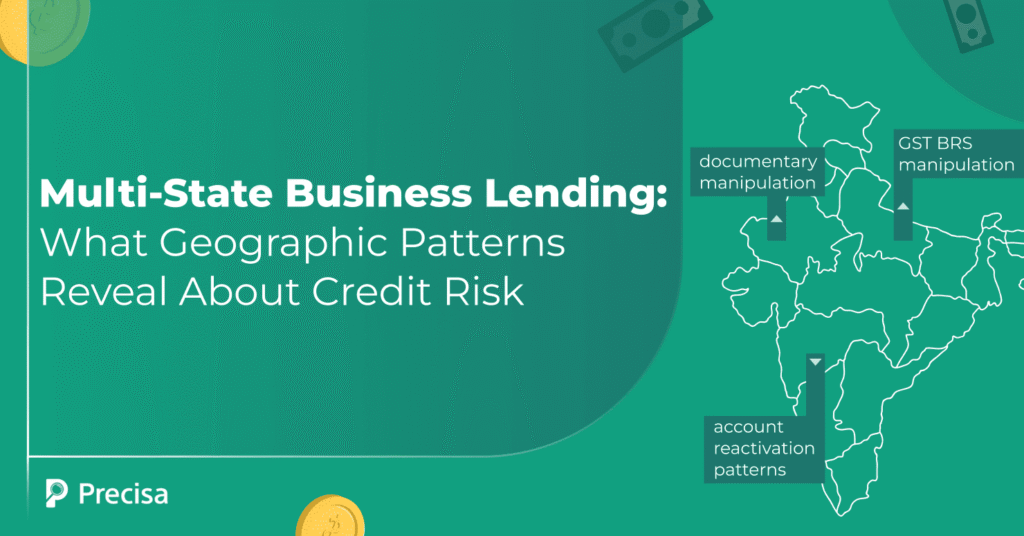
Multi-State Business Lending: What Geographic Patterns Reveal About Credit Risk
Your underwriter approved a Mumbai trading firm in 48 hours. Clean documents, stable cash flow, CIBIL score of 730. Eight months later, it’s restructured. The Jaipur application you rejected last week? Your competitor funded it, and it’s performing. Same underwriting model. Same credit policies. Different states, different outcomes. India’s ₹46 lakh crore small business credit […]
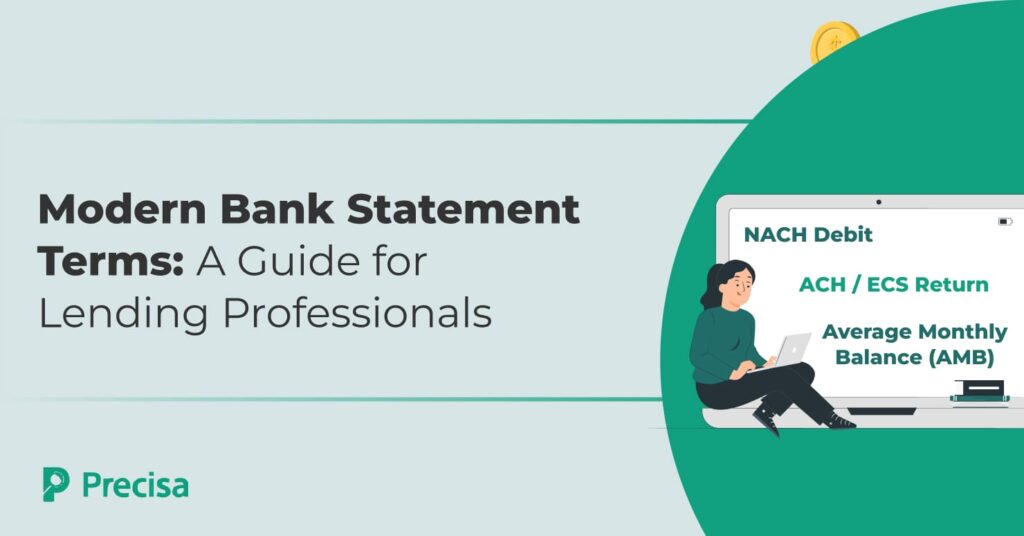
Modern Bank Statement Terms: A Guide for Lending Professionals
Your underwriting team approved a ₹10 lakh loan yesterday. The bank statement showed stable income and salary deposits within the first week of the month. However, they missed a monthly withdrawal of ₹ 60,000 on the same date for six consecutive months. Is it something that requires further investigation, or does the account holder have […]
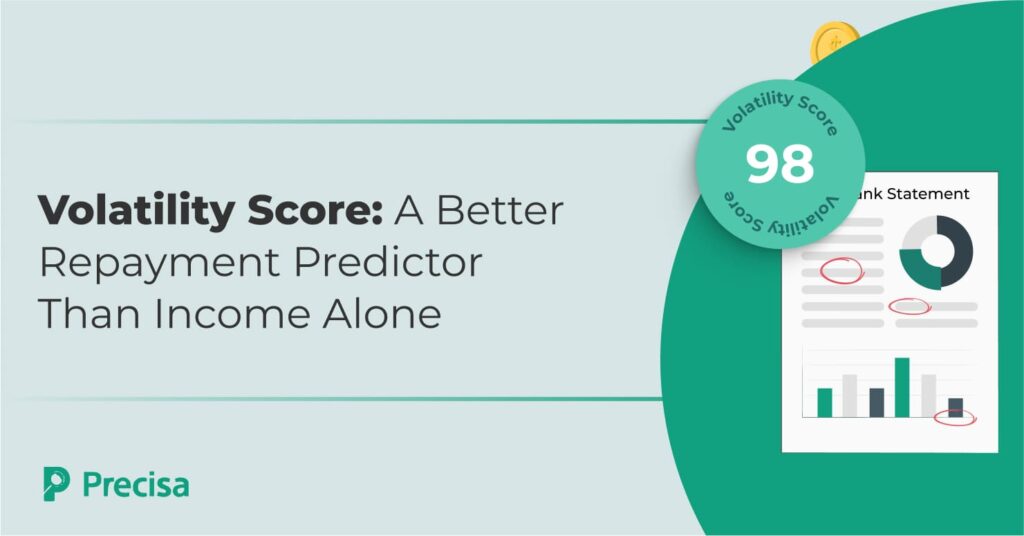
Volatility Score: A Better Repayment Predictor Than Income Alone
Lenders have long relied on income statements to assess repayment capacity. Yet, defaults still occur among borrowers with seemingly high and stable salaries. Income tells you how much someone earns, not how consistently they manage their money. Traditional credit assessments overlook a critical factor – cash flow stability. The volatility score changes that, offering lenders […]
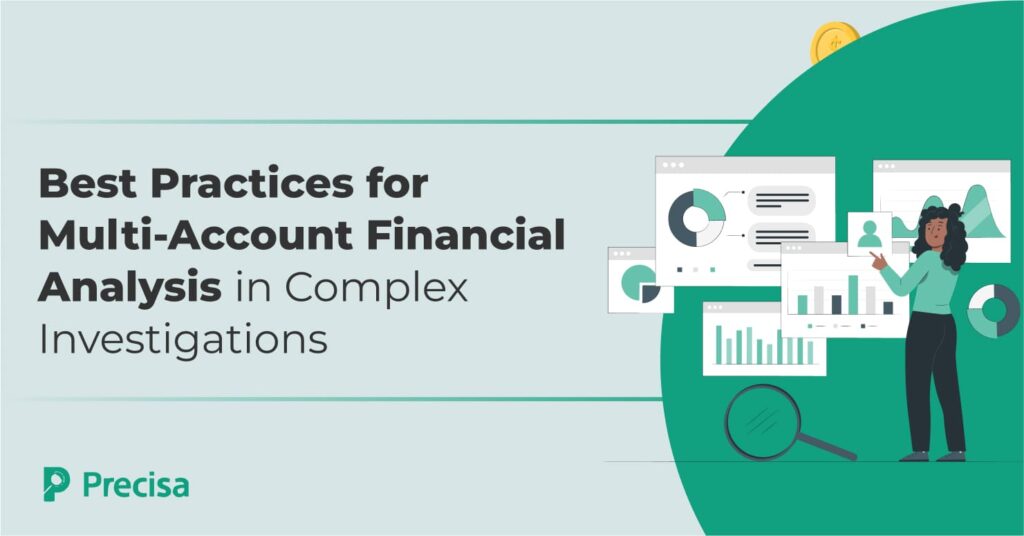
Best Practices for Multi-Account Financial Analysis in Complex Investigations
21st-century financial fraud leaves, not just one, but numerous digital footprints across multiple banks, wallets, and payment platforms. Today, investigators face suspects who split transactions across 5 to 20 different accounts to obscure money trails. What once involved tracking cheques and cash deposits now requires analysing UPI transactions, NEFT transfers, and cryptocurrency movements all at […]
How Daily Balance Tracking Improves EMI Recovery Rates
For Direct͏ Selling Agents (DSAs) and Non-Banki͏n͏g Financia͏l C͏ompanie͏s (NBFCs) in India͏, tim͏ely EMI recover͏y re͏mains ͏a sig͏nif͏ic͏ant ͏challenge. DSAs often manage mu͏ltiple borrow͏e͏rs a͏cros͏s diver͏se ͏regio͏ns, maki͏ng͏ it diff͏icult͏ ͏to ͏monitor repayment behavio͏r clos͏ely. Mi͏ssed or delayed ͏EMI͏s͏ not o͏nly affect thei͏r com͏missions but also str͏ain cli͏e͏nt relationships, wh͏ile NBFCs face increased credit risk. […]
DSA Digital Transformation: From 2-Hour Manual Process to 30-Second Analysis
We see this often with DSAs—long days spent chasing leads, assessing eligibility, and preparing applications, only to have hours disappear into manual verification, document sorting, and fragmented compliance checks. DSAs tell us the same thing repeatedly: processing a single case can take over two hours, slowing growth and making it harder to keep up with […]
Transforming DSA Operations: From Manual Risk Assessment to AI Precision
Today, the landscape for DSA Services and Direct Selling Agent operations is ͏shifting͏ ͏fast. Historically, ͏Direct Selling Agent teams͏ ͏u͏͏sed manual risk͏͏ assessments,͏ relying on spreadsheets, gut feel, and ͏time͏͏‑intensive ͏paperwork. That approach led ͏to slow ͏decisions and higher operational ͏risk.͏ Now, emerging ͏͏AI tools ͏offer precision: predictive analytics, ͏natural language processing͏, and real-time ͏͏monitoring. […]