
Scam Alert: 5 Ways Lenders Can Protect Themselves from Sophisticated Scammers

According to a recent Reserve Bank of India (RBI) report, bank fraud cases increased by 27% year-on-year in FY 2024-25. Between April and September 2024, the Indian police registered 18,461 cases, amounting to INR 21,367 crore, a significant rise from the 14,480 cases.
Lending money carries inherent risks, which are amplified by swindlers. Despite stringent rules and regulations in bank fraud protection, scammers continue to exploit lenders’ vulnerabilities in the loan application process.
From forged documents to fraudulent loan stacking, scammers regularly improvise their scamming methods.
Therefore, lenders must use smarter tactics to protect themselves from these smart criminals. One of the key steps in this process is strengthening the bank statement analysis phase during loan processing using intuitive financial data analytic tools.
5 Types of Loan Frauds Lenders Faced in 2024
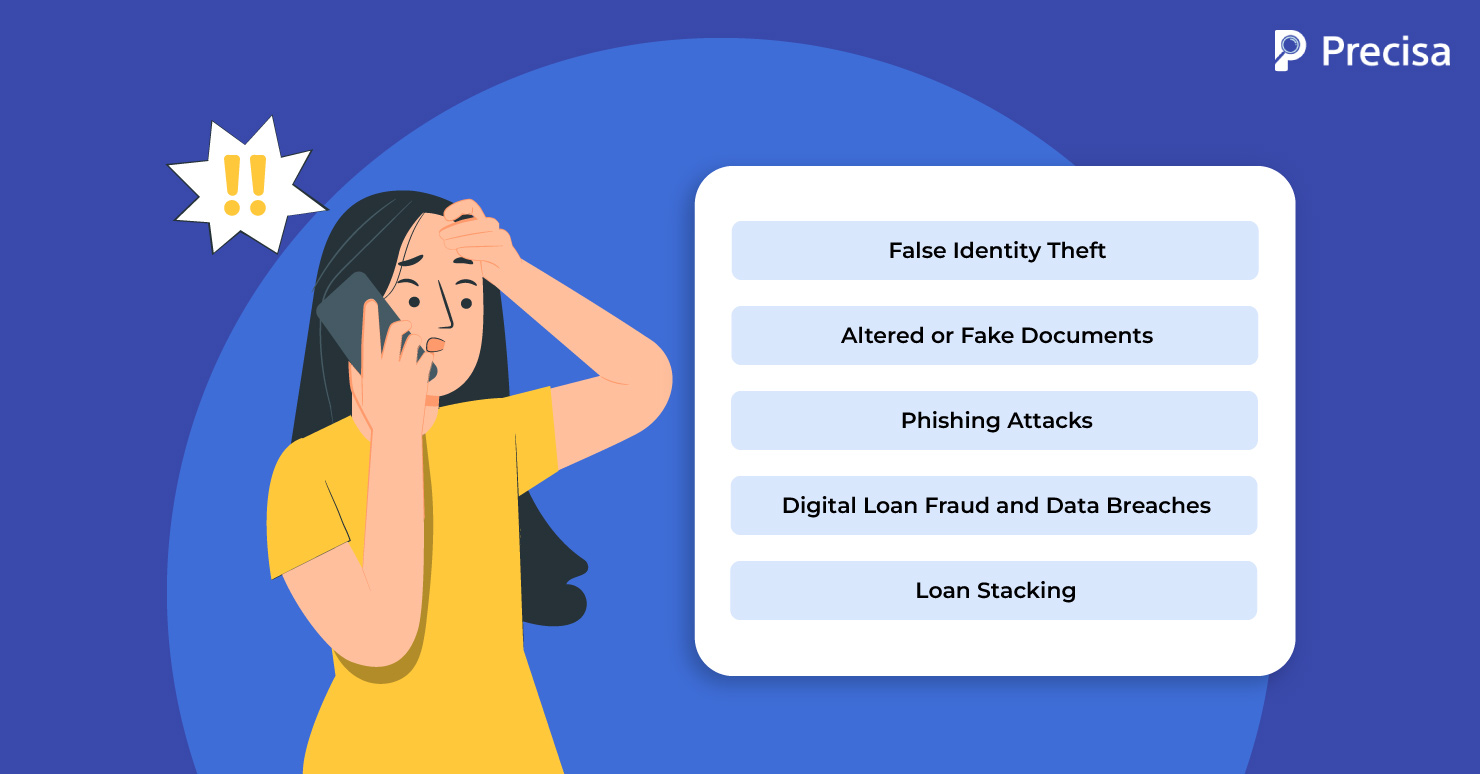
In 2024, loan fraud took various forms, each exploiting lenders with well-planned tactics. Personal loans served as the primary method for carrying out these scams:
1. False Identity Theft
Scammers are becoming increasingly sophisticated in their methods. One common tactic involves creating synthetic identities by combining real and fabricated information.
For example, they might use a legitimate Aadhaar number while fabricating names, addresses, and other personal details to create a new, fraudulent identity. This allows them to exploit genuine data while maintaining a degree of plausible deniability. In turn, lenders may unknowingly approve loans as the identity appears real at first glance.
2. Altered or Fake Documents
Scammers have become experts in submitting fake or modified bank statements, income certificates, and ITR files. With advanced photo editing tools, scammers present seemingly authentic documents that make it harder for lenders to spot discrepancies manually.
3. Phishing Attacks
Fraudsters send emails or text messages that appear genuine, tricking the receivers into providing bank details, personal information, or login credentials. Scammers use their stolen identity to secure loans online.
As a case in point, the technology sector in India experienced nearly 33% of all phishing attacks, pushing India to the third global rank after the US and UK.
4. Digital Loan Fraud and Data Breaches
Hackers breach the firewalls of lending platforms and steal customer data, such as bank account details and KYC. Scammers also pose as legitimate digital lending platforms to gather people’s personal information. They then sell the data on the dark web, where more sophisticated scams often leverage it for a new cyber fraud scheme called the ‘pig butchering scams.’
These are elaborate scams that exploit individuals by building long-term trust through WhatsApp, Facebook, and Google services.
According to the Indian Cybercrime Coordination Centre, the majority of digital scammers targeting India were believed to be operating from strategic locations in Thailand, Cambodia, and Myanmar.
5. Loan Stacking
This involves applying for multiple loans from different lenders at the same time without any intention of repaying. Scammers provide fake or inflated financial documents to each lender to avoid credit checks.
Loan stacking is common across payday loans or short-term loans. An apt example would be the INR 4.8 crore loan fraud scheme that took place at the Sanathanagar branch of the State Bank of India (SBI).
5 Ways Lenders Can Prevent Scamming
Here are five effective strategies that lenders can use to detect and tackle scamming:
1. Using Advanced Identification Verification Methods
Lenders, including MSMEs and financial institutions in rural areas, should consider using better identity verification systems, such as:
- Biometric Authentication: Implement multi-factor authentication, such as facial recognition or fingerprint scanning, to add an extra layer of security. This will challenge scammers to impersonate victims.
- Micro Deposits: For online applications, send a small amount to the borrower’s bank account to verify ownership.
- Third-Party Identity Validation Solutions: Use machine-learning fintech solutions, like bank statement analysis to verify the authenticity of identity documents. Officials can cross-check the data with official records to make sure they are not tampered with.
2. Detecting Inconsistent or Unusual Transaction Patterns in Real-Time
Unusual transaction histories are one of the most common fraud indicators in lending. This is built upon fabricated income documents, where scammers modify or inflate their bank statements.
They may also create fake sources of funds to show their creditworthiness. Examples of these inconsistencies are unexplained deposits, non-recurring payments, sudden spikes in deposits, large fund transfers between multiple bank accounts, or frequent international transactions.
Lenders can use automated fraud detection systems to spot such abnormal patterns. These state-of-the-art, AI-enabled technologies are designed with unique built-in algorithms that can analyse vast amounts of data and flag anomalies in real time.
By continuously learning from new data, these tools become increasingly effective at identifying potential threats.
The flags can help lenders dig deep into the applicant’s activities within hours and thoroughly conduct due diligence.
3. Conducting Thorough Customer Risk Profiling
Customer risk profiling involves thoroughly evaluating customers’ alternative credit data sources. This includes using a customer rating system to analyse the digital footprint and identify the risks associated with specific customers.
- Fraudsters often have minimal digital footprint, such as social media activity, utility payments, browsing history, eCommerce purchases, device IP addresses, emails, and chat interactions.
- Abnormalities like unusual login locations or sudden spikes in online purchase volume can indicate deceitful activities.
- Investigating borrower’s online presence can provide insights into their legitimacy.
4. Assessing Loan Repayment Probability
Lenders can use cloud analytics tools’ data-driven approach to assess borrowers’ likelihood of repaying loans. The tools use various financial factors, such as UPI transaction trends, income consistency, debt servicing history, and overall spending behaviour, to evaluate repayment probability.
For example, the Precisa provides an alternative way to evaluate the creditworthiness of individuals, especially in cases where credit bureau scores, such as CIBIL, might not be enough. Precisa assimilates data from credit reports, GSTRs, and bank statements to calculate the Precisa Score. The score evaluates indicators such as:
- Average daily balance
- Irregular activities
- Transaction volatility and circular transactions
- Cash credit utilisation
- Overdrafts (OD)
The computed score ranges from 0 to 1000, where 1000 indicates ‘no-risk’ and 0-499 means ‘moderate to high risk.’
By combining traditional and non-traditional elements, Precisa Score provides an inclusive credit assessment, helping lenders reduce the risks of delinquencies and defaults.
5. Upgrading Technology for Continuous Monitoring
Lenders should continuously update their security measures to counteract evolving scams. Upgrading the fraud prevention system with the latest technology can help lenders create a more secure environment.
Here are a few ways banks can use advanced technology to monitor lending:
- Automate the limits on the number of loans a borrower can secure simultaneously based on their behaviour and activities.
- Real-time alerts can be used to set up triggers for specific thresholds, such as the number of loan applications during a time frame.
- Use risk-based pricing to modify the interest rates, tenure, and loan terms based on the applicant’s risk profile.
- Establish clear and transparent communication with borrowers, including visiting them personally to verify addresses and personal information.
Use Precisa Against the Risks of Sophisticated Scammers
With an increasing number of bank fraud cases, lenders cannot overlook the usefulness of advanced technology in fighting fraudsters.
Precisa enhances bank statement analysis and identification verification with its Anti-Money Laundering (AML) analysis system. The powerful tool allows lenders to leverage advanced algorithms and data analytics to perform complex financial investigations and examine cybercrime.
By flagging irregular transactions and recognising patterns associated with money laundering, Precisa helps lenders make informed decisions. With features like real-time customer profile scoring and regulatory checks, they can uncover financial crimes, no matter how sophisticated they are.
Sign up for a free demo today!


