How to Leverage Balance Sheet Analysis to Make Informed Credit Decisions?
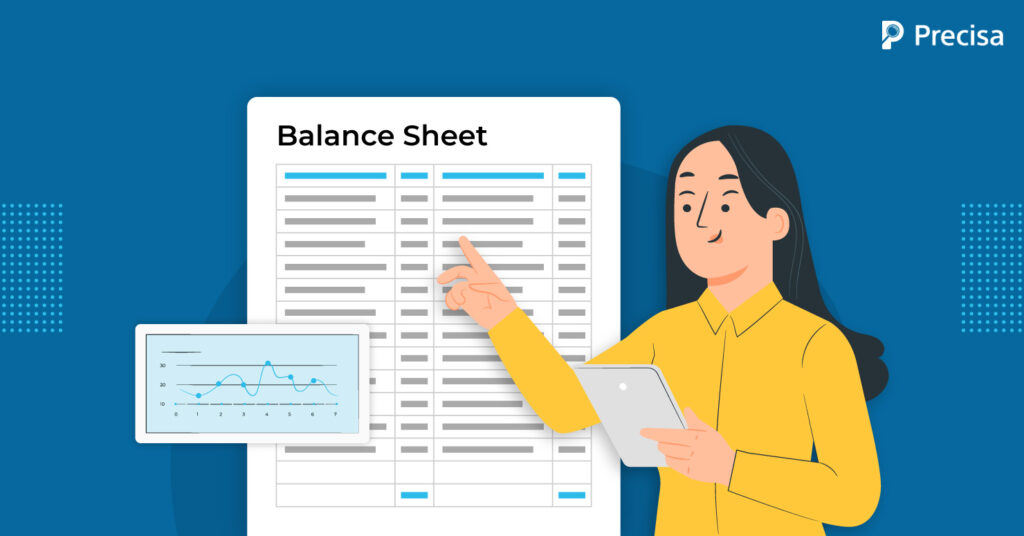
The balance sheet is a financial statement that provides information about a company’s assets and its sources of capital (equity and liabilities/debt). In this context, balance sheet analysis examines a company’s balance sheet to assess its financial position, liquidity, solvency, and overall financial stability.
It has emerged to be a valuable tool that helps lenders, investors, and other stakeholders make informed decisions about its creditworthiness and overall business health. For lenders, balance sheet analysis holds paramount significance as it helps them minimise risks. In this blog post, we discuss how this analysis can help them make sound credit decisions by assessing an applicant’s financial health and creditworthiness objectively.
Using Balance Sheet Analysis for Credit Decisions
Lenders can leverage the following aspects of the balance sheet to reach informed credit decisions:
1. Liquidity
Liquidity is crucial for a company’s financial health, reflecting its ability to meet short-term obligations, such as paying bills and covering operating expenses. To assess a company’s liquidity, two key ratios are commonly used:
- The Current Ratio: This ratio compares a company’s assets to its liabilities. A higher current ratio is a positive liquidity indicator, implying that the business has a greater asset base to cover its short-term obligations.
- Essentially, it shows the company’s capability to pay off debts due within a year using assets that can be converted into cash within the same period.
- The Quick Ratio: Also known as the acid-test ratio, this measure provides a more stringent assessment of liquidity by excluding inventory from the calculation. Inventory is often considered the least liquid of current assets since it might not be quickly convertible to cash.
- A quick ratio above 1 is a strong sign that the company can comfortably handle its short-term liabilities without relying on selling inventory. This suggests a sound financial position, as the business can promptly fulfil its obligations, even without inventory liquidation.
Both these ratios offer insights into the financial resilience of a company, with the quick ratio providing a more conservative view by focusing on assets readily convertible to cash.
2. Solvency
Solvency is another aspect that balance sheet analysis focuses on for making credit decisions. It measures a company’s long-term financial stability and evaluates its capacity to meet long-term obligations.
Lenders can gauge a firm’s overall financial health and the likelihood of default by analysing ratios like debt-to-equity and debt-to-asset. Lower debt levels and higher equity levels are indicators of higher financial stability.
3. Asset Utilisation
Assessing the asset utilisation of a company, a key component of balance sheet analysis, measures the company’s efficiency in using its assets to generate revenue.
Two turnover ratios, for example, inventory and fixed asset turnover ratios, help measure asset utilisation. Inventory turnover estimates the number of times a business can sell and replace its inventory over a period, typically a year.
A higher ratio is an indicator of efficient management of inventory. The fixed asset turnover calculates the revenue generated for each rupee fixed asset; a higher ratio signifies the company is effectively using its fixed assets for profit generation.
4. Financial Trends
Analysing financial ratios as part of balance sheet analysis for credit decisions offers a financial overview at a particular point. This view is not dynamic and does not indicate the company’s trajectory and potential risks. Tracking trends of key financial ratios can help overcome this drawback.
Lenders can recognise potential issues and make more informed credit decisions by analysing trends.
Advantages of Balance Sheet Analysis for Credit Decisions
Analysing the information on a company’s balance sheet helps lenders improve the quality of their credit decisions. Artificial Intelligence (AI), an emerging technology, automates balance sheet analysis and thus makes it more accurate.
Below are a few benefits that a balance sheet analysis offers for lenders.
1. Evaluates Creditworthiness
Lenders can leverage balance sheet analysis to assess the borrower’s creditworthiness and make informed credit decisions. They can estimate a business’s financial health and ability to repay debt.
Lenders get a holistic view of a borrower’s financial position and risk profile by evaluating their assets, liabilities, and shareholders’ equity.
2. Better Risk Identification
Balance sheet analysis is also instrumental in helping identify potential risks associated with a borrower. Lenders can determine liquidity and solvency risks from the balance sheet and adjust credit terms accordingly.
Loan agreements can be restructured to align with the borrower’s risk profile. Lenders can ask for collateral, limit credit exposure or request the borrower to update them about changes in their financial position. This ensures that loan terms are appropriate and manageable for both the lender and the borrower.
Lenders can also leverage GSTR analysis for a more comprehensive risk assessment.
3. Improved Portfolio Management
Balance sheet analysis helps lenders manage their portfolios better. They can evaluate the overall risk profile of their portfolio by looking at the debt levels, liquidity, and solvency of each company in their portfolio.
Based on this analysis, they can spread risk across different companies and sectors and reduce the impact a single default might have.
4. Effective Monitoring
Balance sheet analysis also serves as a tool to monitor a borrower’s financial health continuously. Regular monitoring can help lenders pick early signs of financial distress and take proactive measures to prevent defaults and keep themselves safe.
Early Warning Systems in Banks can help lenders minimise defaults and prevent failures.
5. Reduce Default Risk
For a company to be financially stable, it should meet its financial obligations and maintain its operations over the long term. Lenders want to ensure they extend credit to borrowers who make regular and timely repayments over the loan period; assessing a company’s financial stability helps them make this choice.
Critical financial ratios like the leverage and solvency ratios provide information about the company’s financial stability and ability to service debt. Lenders can accordingly use this data to assess the risk of extending credit to the company.
Lenders can avoid high-risk borrowers and mitigate their risk of loan default.
In Conclusion
Balance sheet analysis is an indispensable tool for lenders and investors and assists them in making informed decisions, managing risk effectively, and optimising their portfolios. Understanding the components of a balance sheet and their implications can help lenders align with their risk tolerance and investment objectives.
Precisa offers a cutting-edge solution, a bank statement analyser that can help retrieve real-time transaction data via Account Aggregator and helps lenders improve the quality of their decision-making. This solution reduces credit processing time by five times.
Contact us to know more.