Everything You Need to Know About Circular Transactions
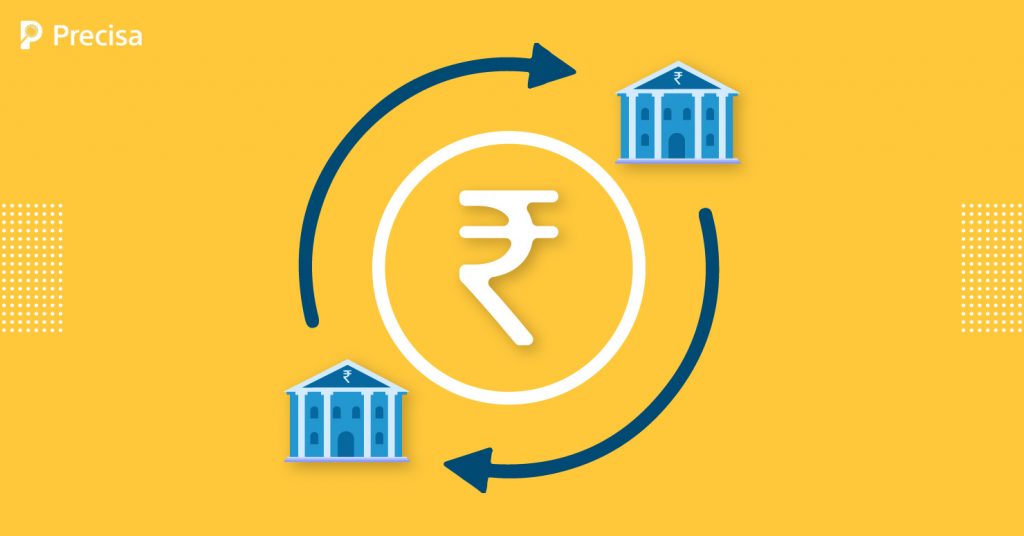
Circular transactions are a type of fake transactions between companies that are part of a single group or under single ownership control. This practice has been proclaimed as a scam and a punishable crime by financial regulators in most countries, including India.
Picture a scenario where Company A sells goods to Company B. Company B sells the same goods to Company C. Company C sells the same goods back to Company A. This way the transaction ends at the same place where it started, making the entire flow of transactions circular.
The above is a simple example involving three companies, but in reality, many more such shell companies or fake companies might be involved in the overall flow of the transactions making the transaction more and more complicated to track.
Lending institutions, be it banks or Non-Banking Financial Corporations (NBFCs), either directly or indirectly become victim to such scams. The consequences are at times severe.
Before we get into the impact on the lending institutions, let us understand circular transactions with an example.
Circular Transactions Example
- Suppose Companies A, B, and C are part of a single group. All three companies are registered as dealers of electronic goods.
- A issues sales invoice to B amounting to INR 5,00,000, wherein GST tax amounts to INR 50,000. Understand that this is just a sales invoice and there is no physical movement of goods.
- B issues sales invoice for the same electronic goods to C for INR 4,00,000, wherein GST amounts to INR 40,000. But, since B has purchased from A, and has already paid advance tax of INR 50,000, B will not pay the tax of INR 40,000, rather they get excess input credit of INR 10,000 which they can either offset in some other transaction during the same month or carry forward to the next month.
- C issues sales invoice for the same electronic goods to A for INR 3,00,000, wherein GST amounts to INR 30,000. But since Company C has purchased from B, and has already paid advance tax of INR 40,000, C will not pay the tax of INR 30,000, rather they get excess input credit of INR 10,000, which they can either offset in some other transaction during the same month or carry forward to the next month.
- Now, A has purchased the same goods back from C for INR 3,00,000, thereby generating a purchase transaction. Due to this, their tax liability reduces to INR 20,000 from the original INR 50,000.
- So the net result is, A pays a tax of INR 20,000, and B and C has an input credit of INR 10,000 each which they can use to offset some other sales transaction. As a group, they end up paying NIL tax for this transaction.
Top reasons why Companies Indulge in Circular Transactions
Circular Transactions, though conceptually might look acceptable, the purpose why this is done by the companies makes this a banned practice. There are many reasons why companies indulge in this. The top reasons are as below.
1. To Shoot up the Valuation of the Companies
By generating fake sales transactions, the overall valuation of the companies increases drastically. Since there are no physical goods involved in the overall chain of transactions, there is no real expense involved for the companies
2. To avail higher loans from banks or Non-Banking Financial Corporations (NBFCs)
Companies indulging in this malpractice, typically look for loans from lending institutions to grow their business. Since the lending institutions set the loan limit proportionate to their valuation and repayment capacity, inflating their sales book through such fake transactions help companies get higher loans.
3. To Avail Fake Input Tax Credit and Pay Less Tax
As explained in the above example, this chain to fake sales and purchase transactions helps the companies to reduce their tax liability.
4. To Pump in Black Money into the Legal Financial System
Some companies do this malpractice for even bigger crimes like pumping in black money to the regulated financial system.
Section 132(1) of the Central Goods and Service Tax Act, 2017 covers the situations wherein, the person issues invoices without actual supply of goods and situations wherein, the person avails input tax credit on fake sales and purchase transactions.
This is a seriously punishable crime and depends on the amount involved in the transaction, the punishments become bigger.
The Impact of Circular Transactions on the Lending Institutions
There are many impacts that lending institutions incur when they issue loans to companies involved in circulation transactions. The top impacts are as below.
1. Increase in NPAs
As explained above, the top reason why the companies indulge in this malpractice is to inflate their valuation. These companies typically get bigger loans showing inflated balance sheets. These companies typically repay the loan instalments, till they are caught by the enforcement agencies.
But as soon as the companies are tagged as fake, they go through criminal actions. But the end result is, the lending institutions struggle to recover the loans and the loans become NPAs. Eventually, the lending institutions are forced to write off the loans and book loss.
2. Loss of Reputation
If the money involved in such bad loans are big, this will have a direct impact on the reputation of the lender, since the money lent would typically be from their deposits.
3. Lending money for bad causes
As explained above, some companies do this malpractice to pump in black money to the system. But the irony is, this black money helps the companies inflate their valuation and borrow bigger loans. The amounts received as loans could be used for illegal activities. So, unknowingly the lending institutions get themselves funding the illegal activities.
In conclusion, circular transactions are very complicated to track and prevent. It is a punishable crime. So, it becomes the responsibility of the lending institution to avoid dealing with such companies.
As we know the bank statements of the companies have a record of every single debit and credit transaction, the lending institutions should do a thorough check of the bank statements for traces of circular transactions. But since the bank statements of companies typically run for pages and pages, it becomes humanly impossible to identify such complicated circular transactions.
This is where the lending institutions can involve advanced AI tools like Precisa – Bank Statement Analyser (BSAs) to parse the bank statements and clearly tag such circular transactions at the loan application stage itself and distance themselves from lending to such fake companies.
Experience the power and simplicity of Precisa. Start your free trial today!