
An Introduction to Alternative Credit Scoring in India

India is on the verge of astounding economic growth, with nearly 55 to 60 million MSMEs contributing to the employment and GDP of the country.
However, this growth story faces a challenge from the lack of access to formal credit. Nearly 40% of the credit requirements are fulfilled through the informal channel, where interest rates are high enough to deter lenders.
Additionally, insights from research by Home Credit India reveals that 46% of people borrowed money to run their households during the pandemic. This highlights that the requirement for funds is at an all-time high currently.
Access to finance is a significant hurdle for small business owners and neo entrepreneurs. The traditional credit scoring methods fail to capture borrowers with little or no credit history, and they may fall in the poor (subprime) category.
This works as a disadvantage for the borrowers. They cannot qualify for a loan, and even if they get one approved, they have to pay a higher interest rate. But alternative credit scores can address this problem sufficiently. It can help the creditor gauge the borrower’s creditworthiness based on their digital footprints, the borrower’s creditworthiness based on their digital footprints which is far more accurate in today’s era.
What is an Alternative Credit Score?
Alternative credit score involves electronic data collection on the payment profile of the loan applicant. This includes regular information like utility bills, mobile bills, bank account details, rental and lease payments, and internet usage.
The credit assessment is based on 5 C’s:
- Character- The applicant’s credit history
- Capacity- His/her ability to pay
- Capital- The amount of money available to him/her
- Collateral- An asset that works as a security
- Conditions- The intended use of the loan, loan amount sought, and current interest rates.
This means the applicant’s ability and willingness to pay back the loan amount coupled with financial stability is considered to assess creditworthiness.
How Does Alternative Credit Scoring in India Work?
Data sets are gathered for the payment details in areas as mentioned earlier using AI and ML-powered algorithms. The payment patterns and trends indicate the applicant’s intention and the ability to repay the loan in a disciplined manner. It reflects the creditworthiness more transparently than the traditional credit score, which relies heavily on credit ratings.
Traditional methods to generate credit ratings remain valid for 2 to 3 years. However, the applicant’s financial position can change either way during this time. For example, a person with a good score may have trouble repaying the loan with a recent job loss.
Such a loan application approval may prove risky to the lender. On the contrary, a person without a good credit score but willing to pay on time may not get the loan due to a low credit score, thus a loss to both the borrower and the lender.
Four Benefits of Relying On Alternative Credit Scoring
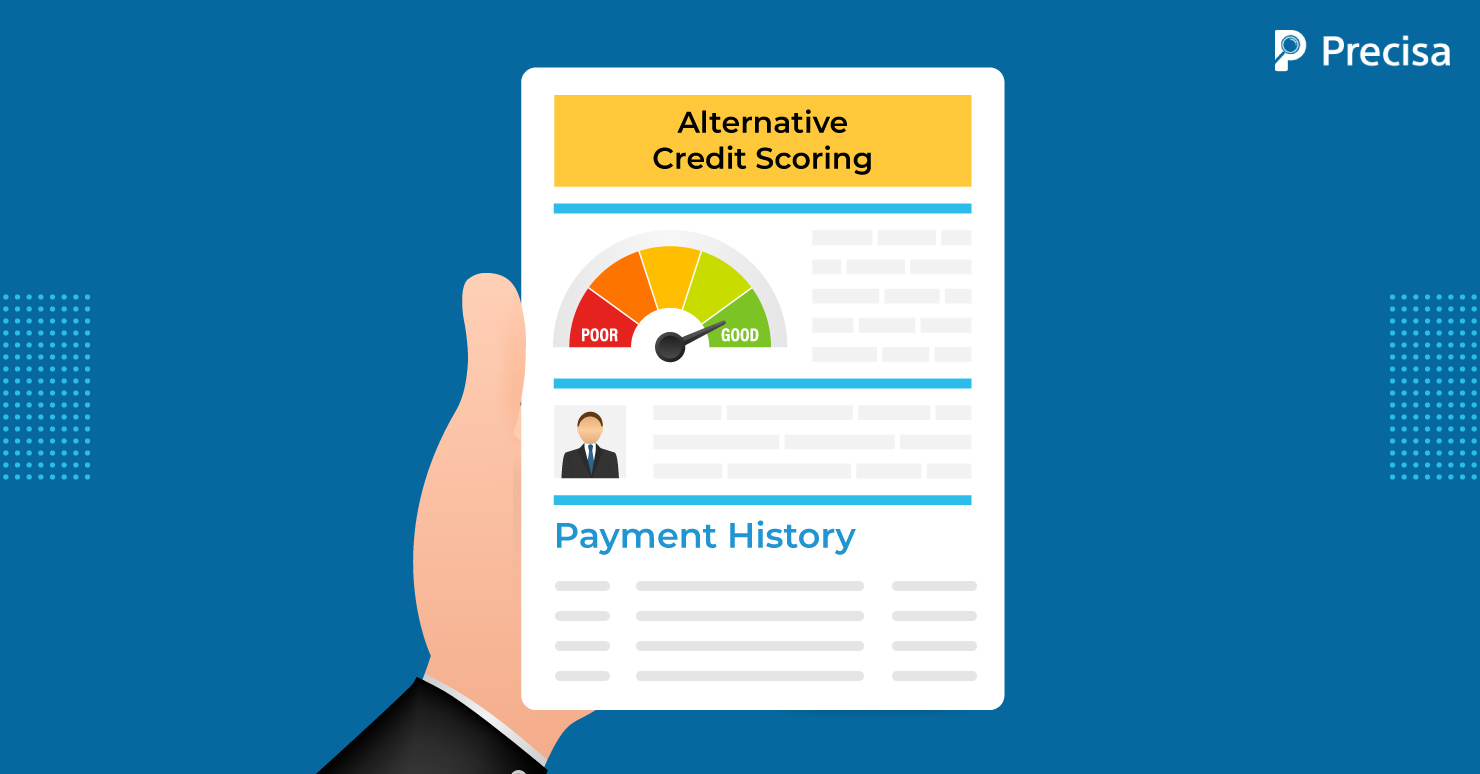
The calculation of alternative credit scores is done on the data that major credit bureaus do not track. For example, credit bureaus do not track data about rent, utilities, or subscription services. The alternative credit scoring also considers non-financial details like employment history and credit card details.
This eye for detail makes alternative credit scores important for the lending market in current times. Below are the ways how alternative credit scoring has the edge over the traditional:
1. Loan Approvals Become Less Risky
Even if credit scores are available through the traditional channels, supplementing it with alternative credit data can make a difference in reducing risk.
For example, a loan applicant who struggles to pay rent on time is also likely to default on monthly loan repayments. Similarly, data from telco companies can be analysed to predict the risk level of the applicant. ML is used to derive insights from micropatterns that can be correlated with risk to generate leads for lenders. Traditional credit enquiry does not help in this regard.
2. Alternative Credit Scores Help in Improved Assessment
Traditional credit scoring methods provide more than enough data to assess individuals with high scores (super prime) or poor (subprime). However, the vast majority of applicants fall somewhere in between. Then again, traditional scores are not enough.
For example, a loan applicant with a low credit score application might be rejected because of being in the subprime category. However, alternative credit scoring might reveal that the applicant has been paying recurring bills on time. That changes the picture. The applicant becomes eligible for loan consideration.
3. Increase in Market Reach
A large section of the population is unbanked or does not own a credit card. Without any credit history, traditional methods will not reflect their creditworthiness. As a result, their loan applicant will stand rejected. With an alternative credit score, each applicant gets a fair chance and assessment on the individual level.
4. Enriched Customer Experience
Lenders can reduce their loan origination processing costs by using alternative credit score methods. The benefits can be passed on to the customers as lower interest rates. With automated data processing and analysis for underwriting loans, creditors can reduce prejudice and errors with manual loan application processing.
The Need for Integrated Data Analysis System like Precisa
India is still in the nascent stage of the alternative credit score movement. This may have slowed it from gaining traction, but it will surely adapt to change.
Alternative credit data is sensitive information and requires extra stringent measures of data protection and security. In addition, current rating measures overlook insights from other sources like real estate information, driving history, income over time and others.
Lenders should consider using a credit analytics solution like Precisa that draws insights from bank statement data to provide a comprehensive overview of the loan application.
It helps uncover data patterns to discover current trends and connect the dots of lending decision-making. With its streamlined system fully integrated into LOS, you can gain a new perspective of your applicants and improve portfolio allocation performance.


