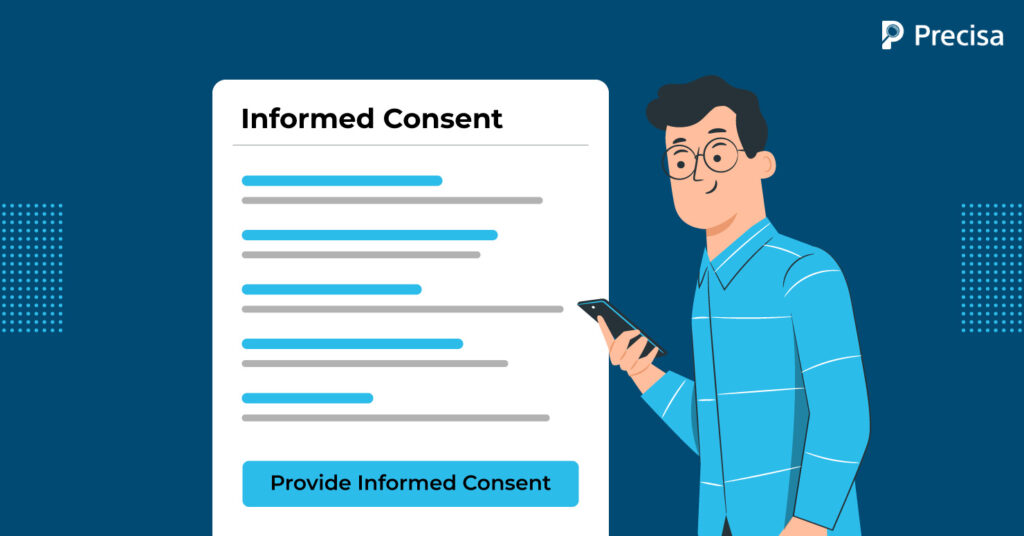
When financial data is involved, consenting without the full knowledge of the terms and conditions can have trust-reducing consequences for consumers.
This can make financial consumers more reluctant to consume important services like loans.
On the other hand, consumers may also need to share the same data several times when applying to multiple service providers for the same service. No doubt, the process is cumbersome. On top of that, it can result in errors or missing information and thus delay the delivery of services.
These two unique challenges occur due to a combination of inefficient data collection processes and a lack of consumer knowledge. But both result in reducing all-around trust, which is bad for business.
This is where the account aggregators framework is creating a paradigm shift in the financial world.
Account aggregators offer a safe, secure, seamless workflow of informed consent and efficient data collection, revolutionising financial services.
Let’s understand how this system works and bridges gaps.
What Are Account Aggregators?
The Reserve Bank of India launched the account aggregators framework in 2021 as a digital mechanism to simplify and strengthen the data-sharing process for consumers who engage with multiple financial service providers.
- By storing their financial data with account aggregators, customers no longer need to type out the data every time they want to access a new service or product from a service provider. The aggregator they are registered with does the job.
- Financial data can include investment information, bank statements, tax returns, loans, invoices, and credit card information.
- Also known as Financial Information Users (FIUs), the service providers include banks, digital lenders, and insurance businesses, which require access to consumer data when underwriting loans, policies, and credit cards.
As of November 2022, the account aggregator network in India had 76 certified entities as follows: eight account aggregators, 24 banks, 29 NBFCs, 26 registered investment advisors (RIAs), 3 insurance companies, 3 stock brokers, one alternative investment fund (AIF), one insurance broker, and one pension fund.
Like the banking ecosystem, the account aggregators network is highly regulated. An account aggregator requires a license to start operations.
Another important aspect is informed consent, an important distinguishing factor that gives consumers more control over the data they share.
Importance of Informed Consent
Today, many businesses request consumer consent when collecting data for varied outcomes. However, the existing framework for requesting consent is a poorly designed one.
For instance, it does not clearly furnish all the details so the consumer can make an informed decision.
Despite this issue, consumers in a hurry to apply for a product or service agree to the terms and conditions without thoroughly understanding what they are signing up for.
This trend of giving “uninformed” consent can have negative consequences for consumers and businesses. When it comes to sharing financial data, the stakes become much higher since consumers’ sensitive personal data can be compromised.
This is where informed consent plays a critical role. As a case in point, the guideline for account aggregators requires divulging enough details to enable consumers to make informed decisions within minutes.
Key Details Shared As Part of Informed Consent
The account aggregator network was created to enable easy financial data sharing with informed consent. As part of the process, the following details are declared upfront before a consumer offers permission:
- Name of the Financial Information User (FIU), such as insurance companies and wealth advisories, which offer consumers services and products
- Name of the Financial Information Providers (FIPs), such as banks and NBFCs, which will provide bank statements
- Digital signature of the Account Aggregator that is requesting data
- The reason for requesting this data (such as lending, insurance, or wealth management)
- The frequency of data pulling (once or at a recurring frequency)
- The specific data fields to be shared from a financial document
- The time frame during which the FIU will use the data
- The duration of user consent validity
Benefits of Informed Consent by Accounts Aggregator
Here is a snapshot of how an efficient, transparent, informed consent process benefits both consumers and businesses:
For Consumers
Consumers tend to be much more cautious when sharing financial data. However, with the establishment of account aggregators, they can make strategic decisions about sharing financial data within seconds, with the knowledge that all security protocols are being followed due to the thoroughness of the disclosure.
Sharing complete data quickly enhances their chances of accessing financial products and services as per their desired timeline.
For Businesses
Service providers often struggle with delayed information, or lack of it, which does not allow them to make quick underwriting decisions.
The informed consent process by account aggregators allows them to receive all information quickly and simultaneously, thus expediting their internal process.
For instance, lenders are in a position to do a thorough analysis of a potential borrower’s financial data, reduce turnaround time on loan applications, and convert leads into customers.
The Takeaway
As more businesses register with the network, it will become easier for consumers to share relevant information and for financial businesses to convert leads into customers faster.
Hence, it is a win-win for all stakeholders.
Financial services businesses will have quicker access to complete financial data such as bank statements, invoices, and Goods & Services Tax Returns, which need to be thoroughly analysed for strategic decision-making. They will be able to deliver services in an accurate, customised, efficient manner, with a quicker turnaround time.
Presica’s user-friendly and web-based Bank Statement Analyser tool aims to simplify the analysis process through automation, which enables the results to be delivered in minutes. The software provides actionable insights on an easy-to-use dashboard, helping businesses make informed lending decisions.
Request a free demo today!
 Mumbai