
Tech-Driven Precision: Navigating RBI’s Updated Priority Sector Lending
The concept of priority sector lending has its origins in 1972. This was when the Reserve Bank of India (RBI) first introduced the concept of opening up credit access to economically underserved consumers. This step was considered to be an important one in the nation-building journey as it enabled development.
In June 2024, the RBI revised the priority sector lending norms to become even more inclusive.
In this blog post, we deconstruct priority sector lending and its revised vision and goals. We also outline how lenders can leverage cloud-based, AI-powered financial analysis solutions to capitalise on opportunities while efficiently managing risk.
What is Priority Sector Lending?
Underserved consumers, typically, work in specific sectors. These sectors have been identified and categorised under the priority sector lending (PSL) scheme.
These include agriculture; Micro, Small and Medium Enterprises (MSMEs); education; affordable housing; social infrastructure and renewable energy.
In 2021, RBI also added self-help groups (SHG) and joint liability groups (JLG) (small groups of individuals belonging to similar socio-economic status and occupations), into the priority lending sector fold.
Domestic and foreign banking entities must lend 40% of the adjusted net credit to borrowers belonging to priority sectors.
Revised Priority Sector Lending Norms
The revised priority sector lending norms are as follows:
- Districts will be ranked according to their per capita credit flow to priority sectors and designated a specific weight. Lenders can refer to the ranking to strategise and meet their priority lending targets.
- From FY25, more weight (125%) will be given to borrowers in districts with low loan availability (less than INR 9,000).
- Less weight (90%) will be given to borrowers in districts with high loan availability (over INR 42,000). Other districts will continue to have a weight of 100%.
Transformative Importance of Technology
The new priority lending rules present both opportunities and challenges for lenders.
The credit gap in India is estimated to be worth INR 33 trillion.
This indicates that lenders can help close the gaps and bring new borrowers into the fold and convert them into consumers of the lending ecosystem.
At the same time, lenders will be engaging with first-borrowers with no credit history, or ownership of assets. These factors can contribute to the financial risks.
Additionally, the adoption of AI-powered lending solutions can play a transformative role in lenders meeting their targets, while effectively managing risks.
Key Tech-Enabled Lending Strategies
Here’s a snapshot of tech-enabled strategies that can help lenders navigate the priority lending process with the right approach:
Accurately Access Risk Profiles
New priority lending rules will nudge lenders to underwrite loans for an underserved audience. Large volumes of these loan applicants may have been denied loans in the past due to lack of a credit score, or assets.
By analysing available financial data in depth, lenders can take a data-driven approach to gauge risk profiles accurately.
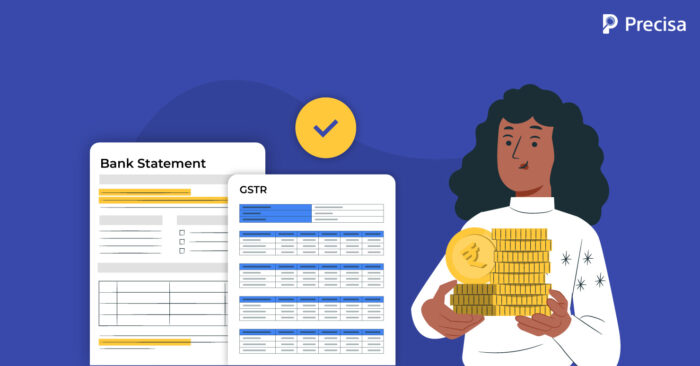
This approach also helps lenders get a true picture of cash flows, income, expenses, and consumer behaviour. The use of a bank statement analysis solution like Precisa lenders to account for all transactions and determine the financial status of borrowers, accurately. This AI-powered software can also detect any irregularities in banking transaction patterns.
Based on in-depth analysis, the software allocates a creditworthiness score. The score helps lenders eliminate bias and offer a fair assessment of borrower risk profiles.
Offer Relevant Loan Products
Lenders must be prepared for key differences between districts with low per capita credit access and those with normal/ higher access. For instance, the ticket size of loans may be lower. Smaller loan values can go a long way in helping businesses and retail consumers in priority districts meet their goals. Hence, lenders must relook at their products and customise their offerings for this demographic.
The entire customisation process can be automated and data-driven to produce loan products that are relevant to a borrower’s real-time needs. Lenders can offer timely, affordable loans. This approach can help lenders convert more loan applicants into customers of their business. Over time, they may also need access to additional products.
Be Open to Alternative Data
Lenders must be open to assessing alternative data points, rather than just income statements or business accounts of the borrowers. This approach allows borrowers to share bank statements, credit information, as well as Goods & Services Tax Returns (GSTR), to name a few.
GSTR data, for instance, helps lenders cross-analyse transactions related to revenues to check if they are indeed revenues. This way, alternative data is revolutionising lending by eliminating data barriers and making the lending process more democratic.
Ensure Quick Loan Approvals
There is an urgency for loans in priority lending districts due to the credit deficit. Hence, lenders need to simplify the loan application, underwriting, approvals and disbursal process.
Automating the entire lending cycle, end-to-end, can help lenders speed up the process. They can serve borrowers swiftly and efficiently.
A cumbersome task such as data extraction, for instance, can be automated. Lenders can prevent data omissions, and errors in data collection and processing while functioning with lean teams.
Clear Communication of Terms & Conditions
Borrowers must be made fully aware of the terms and conditions of their loan. These include interest, loan repayment tenure, principal amount and the value of the Equated Monthly Installment (EMI). They must be aware of the monthly repayment cycle, late fees and penalties in case of missed EMI payments, and the various payment methods available.
Clear communication will empower borrowers to pay on time, and in full. Transparency, further, helps prevent the growth of Non-Performing Assets (NPAs) and debt delinquencies.
The Takeaway
The revised priority sector lending norms offer lenders an opportunity to innovate, capture more market share, and develop new pipelines of revenue. The use of technology will play an important role in this journey.
So, lenders that make early investments in automated financial analysis solutions can accelerate business growth, faster and more efficiently. They can attract new customers into the ecosystem, and convert them into long-term customers over time.
Presica’s user-friendly bank statement analyzer aims to simplify the analysis process through automation, which enables the results to be delivered in minutes. The software provides actionable insights on an easy-to-use dashboard, helping businesses make informed lending decisions.
Request a free demo today!


