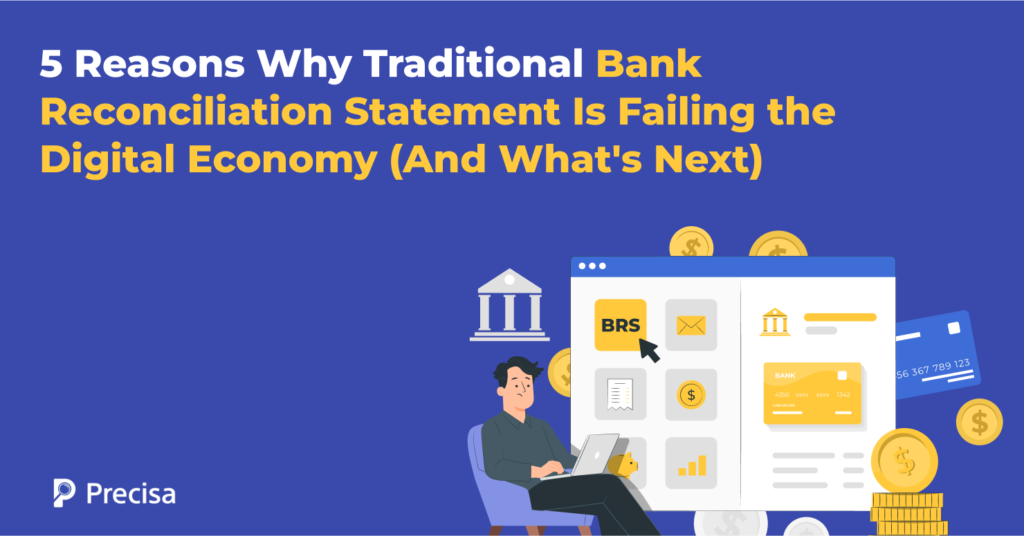
The l͏ending͏ industry has changed significantly in recent years due to the ris͏e o͏f ͏di͏gital͏ paym͏ents an͏d͏ online͏ transaction͏s. A͏s m͏ore b͏orrowe͏rs move to digi͏tal p͏latforms, lending institutions face cha͏lleng͏es wi͏th tra͏ditio͏nal reconcil͏iation methods,͏ which are͏ struggling to keep up with the rapid flow of financial data. Borro͏wers͏ ͏expect loan dec͏isions as fast as possible. […]
CIBIL Report Analysis: A Quick Guide for Indian Lenders
Over 110 million Indians checked their CIBIL report in 2024. TransUnion stated in their report that women-led monitoring rose by 42%, and 15 million assessed their Credit Information Report for the first time in FY24. This shows India’s excellent growth in financial awareness and credit monitoring. On the other hand, banks and NFBCS are seeing […]
Money Trail Detection for Economic Crimes
Economic offences like money laundering, shell companies, and tax evasion have escalated in India. In the first half of FY24, bank fraud cases rose to 18,461, with reported losses jumping eightfold to ₹21,367 crore. These financial crimes undermine public trust and destabilise the economy. The Enforcement Directorate (ED) responded by attaching assets worth ₹1.45 lakh […]
3 Major Consequences of Money Laundering for Lenders in India
Money laundering is clearly one of the biggest threats to India’s financial and economic stability. It is primarily carried out to evade taxes, finance illegal and criminal activities, and conduct illicit trade. The Enforcement Directorate (ED) revealed that it registered over 5,900 money laundering cases between 2014 and 2024. The total value of money laundering […]
How Bank Statement Analysers Simplify Complex Tax Filing
According to the president of ICAI, Mr. Ranjeet Agarwal, India’s chartered accountants issue around 1.5 crore income tax filing certifications annually. Tax professionals spend 25 hours weekly on compliance and handle 400-500 complaints yearly, which underscores their crucial role in ensuring thorough compliance. However, the complexity of tax filing has surged due to rapid regulatory […]
RBI Priority Sector Lending Guidelines 2025: What Changed
Access to credit is a critical driver of economic growth, yet not all sectors receive adequate funding. As of 2024, the total ba͏nk credit in͏ India s͏to͏od at over ₹150 ͏lakh͏ crore, yet͏ a signif͏ic͏ant portio͏n ͏of key͏ sectors like agriculture, MSMEs,͏ and re͏newable ene͏r͏gy con͏tinue to strugg͏le for adequa͏te fu͏n͏ding. With M͏SMEs co͏ntributing 30% […]
10 Top Reasons Lenders Choose Statement Analysis Tools
A thorough evaluation of the applicant’s credit health is integral to the lending process. Lenders use multiple tools to assess an applicant’s creditworthiness, with bank statement analysis being one of the most crucial. While the Indian banking sector has seen a significant improvement in asset quality, with the gross non-performing asset (GNPA) ratio falling to […]
How Bank Statement Analysis Enhances Credit Scoring Models
Credit scoring models are the backbone of the lending ecosystem, enabling lenders, including financial institutions, to evaluate the risk involved while approving loans for every applicant. Traditionally, statistical and linear programming models, often considered the gold standard of credit scoring, were extensively used by lenders worldwide. However, we can see the tides changing as sophisticated […]
Perpetual Credit Lines: Why Is RBI Raising Concerns
India’s lending landscape has evolved rapidly in the last decade, driven by the onset of non-banking financial companies (NBFCs) and Fintech startups and the insurgence of advanced technologies in different areas of the lending cycle. Between 2005 and 2020, the asset size of NBFCs grew at an impressive CAGR of around 18.7%, fueled by the […]
RBI Eases Risk Weights on NBFC and Microfinance Lending
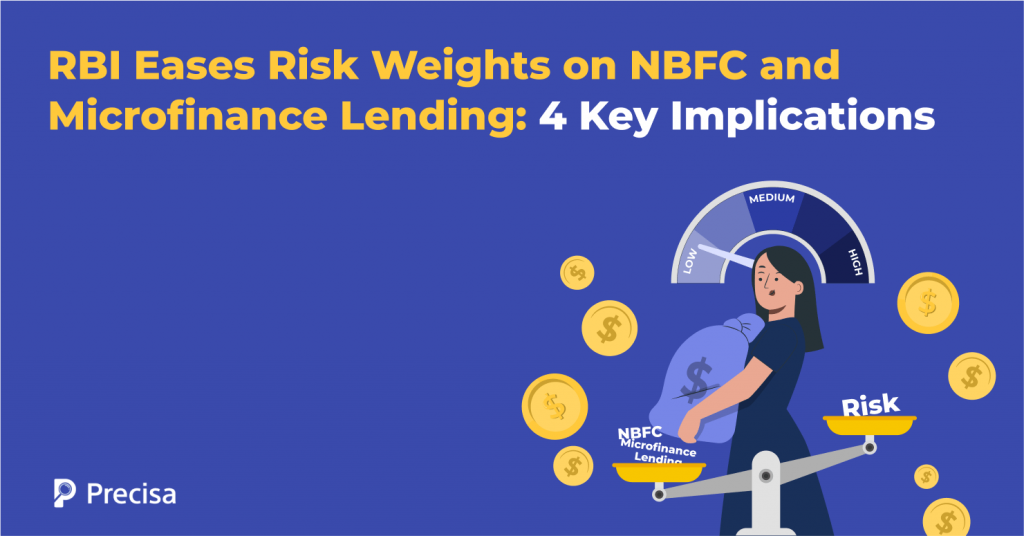
By reducing risk weights on lending to microfinance institutions (MFIs) and non-banking financial companies (NBFCs), the Reserve Bank of India (RBI) has indicated a major policy shift. Intended to boost lending availability and, thus, economic growth, this step now modifies the tighter capital requirements introduced in 2023. The new policy reduces risk weights for certain […]