Understanding the Role of Cloud Computing in Streamlining Bank Statement Analysis
Rapidly growing transaction volume and the ever-increasing threat of data breaches make it imperative for banks to look for innovative solutions to ensure quality service, ease and safety to their customers.
In this backdrop, cloud computing is reshaping how banks analyse vast amounts of sensitive data, making operations faster and more secure. This technology enables seamless bank statement analysis, allowing lenders to quickly assess creditworthiness and detect potential fraud—eliminating the need for physical bank visits.
India’s cloud computing market is booming, projected to surge from $7.2 billion in 2023 to $25.8 billion by 2032.
This represents an impressive 17.2% CAGR, highlighting the rapid adoption of cloud technologies across the country.
Let us explore the role of cloud computing in streamlining bank statement analysis.
An Overview of Cloud Computing in Banking
Banking is gradually evolving from traditional brick-and-mortar establishments with piles of paper and lengthy customer queues.
Its latest digital avatar is facilitated by the evolution of Banking as a Service (BaaS)—a pre-built infrastructure in the cloud, complete with database management, user authentication, and APIs.
McKinsey found that cloud adoption can reduce IT costs by 30-50% for large financial institutions, particularly through savings in infrastructure and operational costs.
So, this move to cloud-based banking isn’t just about using new technology; it’s about changing how financial services work. With the help of the cloud, banks can provide services faster and more easily. This change is improving customer experiences, speeding up services, and creating new opportunities for financial innovation.
This way, cloud computing provides a robust and scalable solution to meet the increasing demands of BaaS platforms, enabling lenders to address the diverse needs of Indian customers and offering many benefits.
Role of Cloud Computing in Streamlining Bank Statement Analysis
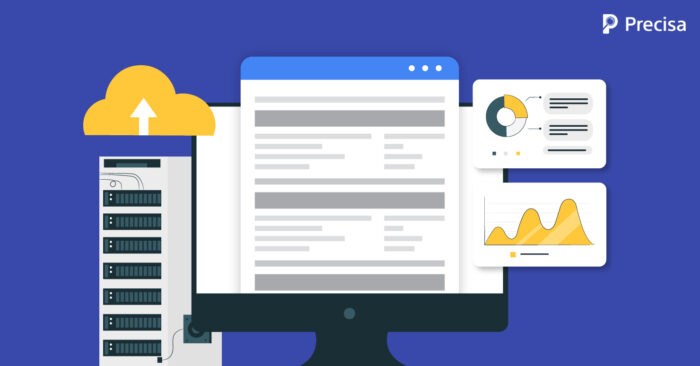
Lenders generally use automated bank statement analysis to review and interpret the transactions in an applicant’s bank statement to assess their credit health and make lending decisions.
Here are 5 ways cloud computing can streamline bank statement analysis.
1. Improved Cost-effectiveness
Adopting cloud computing for bank statement analysis allows lenders to migrate applications and data to the cloud, resulting in massive savings.
A 2021 Accenture study suggests that cloud migration can lead to cost savings of up to 20-30% by reducing the need for physical data centers and lowering the costs of system maintenance.
Cloud providers offer a pay-as-you-go model; lenders have to pay only for active services without upfront payments. Lenders can scale their operations up or down without paying for the unused capacity. They can scale up operations with little additional infrastructure or resources and reduce capacity in lean periods.
2. Centralised Data Repository
Cloud platforms allow seamless integration of disparate business data and operational systems with secure and effortless data sharing.
Lenders can create a centralised repository for all their bank statement analysis data. This helps facilitate instant access to data from any location for all stakeholders, such as analysts, customers and auditors.
Centralised data, apart from real-time access, also helps reduce data silos, inconsistencies or duplication in data, leading to a more accurate analysis. Changes are reflected in real-time, providing up-to-date information to users.
3. Data Processing Is Automated
Bank statement analysis with cloud computing is automated and reduces manual data entry, resulting in improved accuracy and speed.
It helps speed up performance without compromising accuracy; the system can handle large volumes of data and help lenders process their loan applications faster.
Moreover, cloud services enable lenders to easily integrate third-party financial applications through APIs, facilitating cross-platform data sharing. Lenders can streamline the analysis process and provide faster services to customers through cloud-based solutions.
4. Enhanced Analytics and Insights
Cloud computing platforms provide additional advantages to lenders through artificial intelligence and advanced predictive analytics. The AI tools facilitate a comprehensive analysis and review of financial trends and user behaviour patterns, identify spending and cash flow trends, and predict future trends that manual analysis may miss.
Improved analytics offers the following benefits:
- Lenders can develop more customer-centric products and personalise them for their customers.
- Cloud adoption also aids in handling vast amounts of data from various resources and identifying suspicious activities.
- Using advanced techniques, lenders can detect anomalies, which can help in fraud prevention and improve decision-making.
5. Facilitates Data Security and Compliance
Banking statement analysis requires access to sensitive customer financial data; keeping this data safe is crucial for lenders.
Cloud platforms facilitate security and compliance in the following ways:
- The cloud is a more secure environment than most on-premises systems as it offers multiple layers of protection against data breaches.
- A consolidated repository on the cloud facilitates the implementation of stringent access controls. Only authorised users can modify sensitive financial data.
- The centralised system also assists lenders in complying with regulatory requirements for data storage.
- It streamlines compliance by offering transparent audit trails, encryption, and other security features that are easier to manage from a single platform.
Cloud Computing in Banking: Some Challenges
Here are some challenges associated with the adoption of cloud computing in banking:
- Data Privacy Concerns: Storing sensitive financial data in the cloud raises concerns about unauthorised access and data breaches.
- Regulatory Compliance: Banks must ensure compliance with various regulations (e.g., GDPR, PCI DSS) when using cloud services, which can be complex and resource-intensive.
- Integration with Legacy Systems: Many banks still rely on outdated systems, making it challenging to integrate cloud solutions seamlessly.
- Dependency on Internet Connectivity: Cloud services require reliable Internet access; any downtime or connectivity issues can disrupt operations.
- Vendor Lock-In: Relying on a specific cloud provider may lead to challenges in migrating to another platform in the future, limiting flexibility.
Conclusion
Cloud computing is helping lenders streamline bank statement analysis by automating data extraction and providing improved security and analysis through scalable storage solutions.
Lenders can make more informed decisions and improve their profitability and customer satisfaction.
Pecisa offers powerful cloud-based solutions that help FIs streamline their operations. Their analyser aggregates data from multiple account statements and offers predictive analysis based on well-defined rules.
It has real-time integration with GST and credit bureaus to retrieve up-to-date information on a borrower’s credit history. Here’s how it can help banks and lenders to streamline their operations:
- The Bank Statement Analyser extracts data from the bank statement and does away with the challenges of manual analysis of bank statements. The tool helps reduce processing time by 5X and improves productivity by 8X.
- The AI-powered solution expedites the analysis process and provides user-friendly dashboards to assist in making sound lending decisions.
- It supports more than 450 Banks and 1000 formats and assigns an overall creditworthiness score called the Precisa score.
Sign up to know more!