Financial Statement Analysis Software: Aiding Fintech Growth
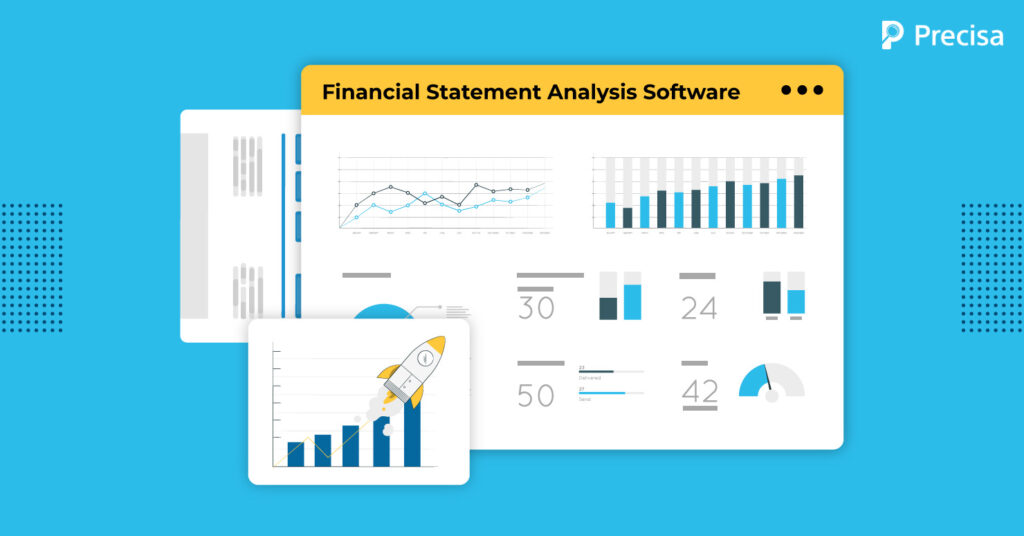
Financial statements contain important data regarding a business’s performance. They are report cards of a firm’s financial health and blueprints for future operations. Financial statement analysis is a strong tool that helps the C-suite in strategic decision-making. It is an activity requiring accounting expertise and knowledge of some bookkeeping programs.
However, advanced financial statement analysis software has enabled businesses to measure, monitor, review, and steer their performances more efficiently. Let us see how fintech companies can benefit from statement analysis software.
Understanding Different Financial Statements
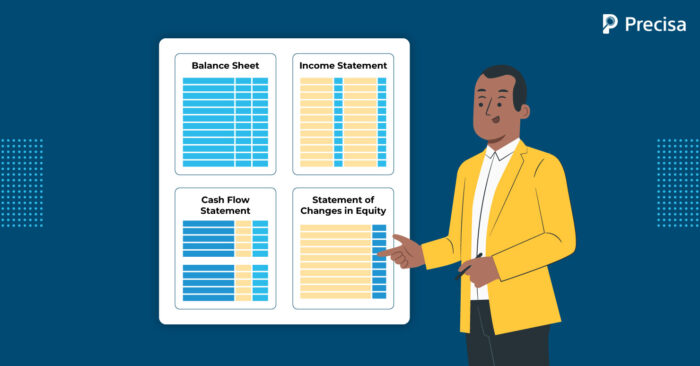
Financial statements record and summarise a firm’s business activities. These statements are usually prepared for a particular period (monthly, quarterly, yearly, etc.) or depict the firm’s financial position on a particular date. Businesses majorly use four statements to assess their achievements.
- Balance Sheet– Lists the value of the firm’s assets, liabilities, and shareholder’s equity as of the last day of a fiscal period. When examined in isolation, a balance sheet only summarises the business’s performance at the end of the reporting period. However, balance sheet data is used to compute financial ratios, which gives comparative information on the business’s performance.
- Income Statement– The income statement provides insight into the company’s revenue and expenditure figures and summarises their overall impact for that reporting period. It provides flash information about the firm’s profitability. Like the balance sheet, the data is used for comparative analysis and understanding industry trends.
- Cash Flow Statement– As the name indicates, this statement tracks the fund inflows and outflows from the firm’s operating, investments and finance activities. It generally measures the solvency position of the business.
- Statement of Changes in Equity– This report records and reconciles changes in owner’s equity during a financial period. Profits and dividend payments during the year are added to or subtracted from opening equity to compute total closing equity. Alternatively known as the statement of retained earnings, it shows how much profit the business retains.
Financial Statement Analysis Methods
Financial statement analysis analyses and interprets different financial statements to aid business decision-making. The internal and external stakeholders review the outcomes of such analysis to make managerial choices related to planning, budgeting, forecasting, etc. The three most common methods of financial analysis include:
- Vertical Analysis– Each line item in the statement is expressed as a percentage of another line item, considered the base figure. E.g., income statement items are expressed as a percentage of gross sales. It is commonly used for making comparisons within a reporting period.
- Horizontal Analysis– Horizontal analysis compares financial information across different periods while taking data from a particular period as the base figure. This analysis is particularly helpful in tracking business progress over the years and helps understand how different business activities affect one another. For instance, an increase or decrease in sales will affect the cash flow.
- Ratio Analysis– Ratio analysis accurately depicts a firm’s liquidity, solvency, profitability, asset management quality, etc. Financial ratios are versatile metrics that can compare a firm’s performance to industry standards and past figures.
Significance of Financial Statement Analysis
Timely and precise analysis of financial records is integral to the sound growth of the business. Financial statement analysis helps understand a firm’s financial standing by identifying its strengths, weaknesses, and risks. The top management executives, finance managers, investors, lending firms, regulatory bodies, etc., need such data to evaluate the business. Financial statement analysis helps companies:
- Attract investments and access credit– Businesses need funds to scale and grow. Investors and lenders use financial statements to gauge the profitability and viability of making investments or advancing loans to the firm. E.g., a simple bank statement analysis can become a powerful tool for managing lending risk.
- Planning, executing, and controlling budgets– Financial statements reveal resource availability like cash or inventory and aid effective deployment.
- Improving debt management– Firms use financial analysis to track debts and limit liabilities. Firms with expertise in credit control generally maintain a healthy financial position.
- Forecasting Trends– Financial statement analysis helps identify industry trends and the performance of a specific firm. By comparing actual achievements with past performances, goals set, or industry benchmarks, one can easily deduce the progress of a business.
Advantages of Financial Statement Analysis Software for Fintechs
Fintech firms make use of financial analysis software to monitor their performance as well as to appraise their clients’ business positions. These tools provide many benefits, such as:
- Faster financial data analysis compared to manual processing
- More accurate and reliable outputs, free of human errors.
- Automation improves management information systems (MIS). Analysis results are available in multiple formats for the specific use of stakeholders.
- Reduced reliance on specialist staff for computations.
- Reduces employee intensity in the analysis process. Expert staff can handle critical decision-making rather than engage in number-crunching activities.
Wrapping Up
Effective financial management needs accurate analysis of financial statements, which is a data-intensive activity. Financial statement analysis software simplifies the task for fintech firms by providing quick and in-depth details on their key performance indicators. Moreover, the software captures anomalies faster while comparing data. Such precise and detailed outputs enable improved decision-making in firms.
Precisa’s Bank Statement Analyser is a powerful tool that classifies, verifies, and analyses bank statements to detect irregularities or manipulations. Our analyser provides the most accurate results, improving your credit appraisal quality. To know more, contact us right away.